
Wabasha County Bench Warrants Explained
Skip a court date in Wabasha County and it is a judge, not a new criminal charge, that signs the bench warrant. Minnesota's official criminal FAQ names the usual triggers. Failing to appear tops the list. So does violating the terms of a sentence, or a warrant filed with a criminal complaint. Some cases start with a summons that nobody answered. Others trace back to an unpaid fine. A skipped condition such as monitoring counts too. The label matters less than the case behind it, because that file decides which court acts and what steps put the matter back on track.
What Happens If You Miss a Court Date
A missed date alone does not create a warrant. In Wabasha County, the order of what happened next matters when you set out to fix it.
- Check the case in Minnesota Court Records Online by case number to see whether a warrant was actually entered.
- Call Wabasha County District Court at (651) 412-8627 and ask what the file shows and what the court requires next.
- Call the Sheriff's Office at (651) 565-3361 to confirm whether the warrant is still open or has been recalled.
- Talk to a licensed Minnesota attorney before arranging an appearance, because showing up in person can result in custody.
Note: If the case number is unknown, the Wabasha County court can search by citation number or locate the file by name and date of birth.
How Wabasha County Bench Warrants Are Issued
Minnesota Rule 3.01 of Criminal Procedure prefers a summons as the way to bring a person before the court. A warrant issues only when the legal conditions for one are present. Fail to answer that summons, though, and a warrant must issue. Rule 3.02 lists what the document must contain. Identifying details go in. So do the alleged offense, the bail amount or release conditions, and a direction that the person be brought before the court. One timing rule deserves notice. Arrested while court is not in session, a person must appear within 36 hours.
The Sign-and-Release Alternative
Not every Wabasha County failure to appear ends in an arrest warrant. Minn. Stat. §629.415 allows a sign-and-release warrant for an eligible misdemeanor or gross misdemeanor failure to appear. No arrest is authorized. No bail attaches. Law enforcement gives notice, releases the person at the scene once the statutory steps are followed, and the warrant is then inactivated in the record. A prosecutor can still argue that bail is needed for victim or public safety. Eligibility depends on the case. The statute took effect January 1, 2024. The Minnesota Revisor of Statutes page sets out the full process.
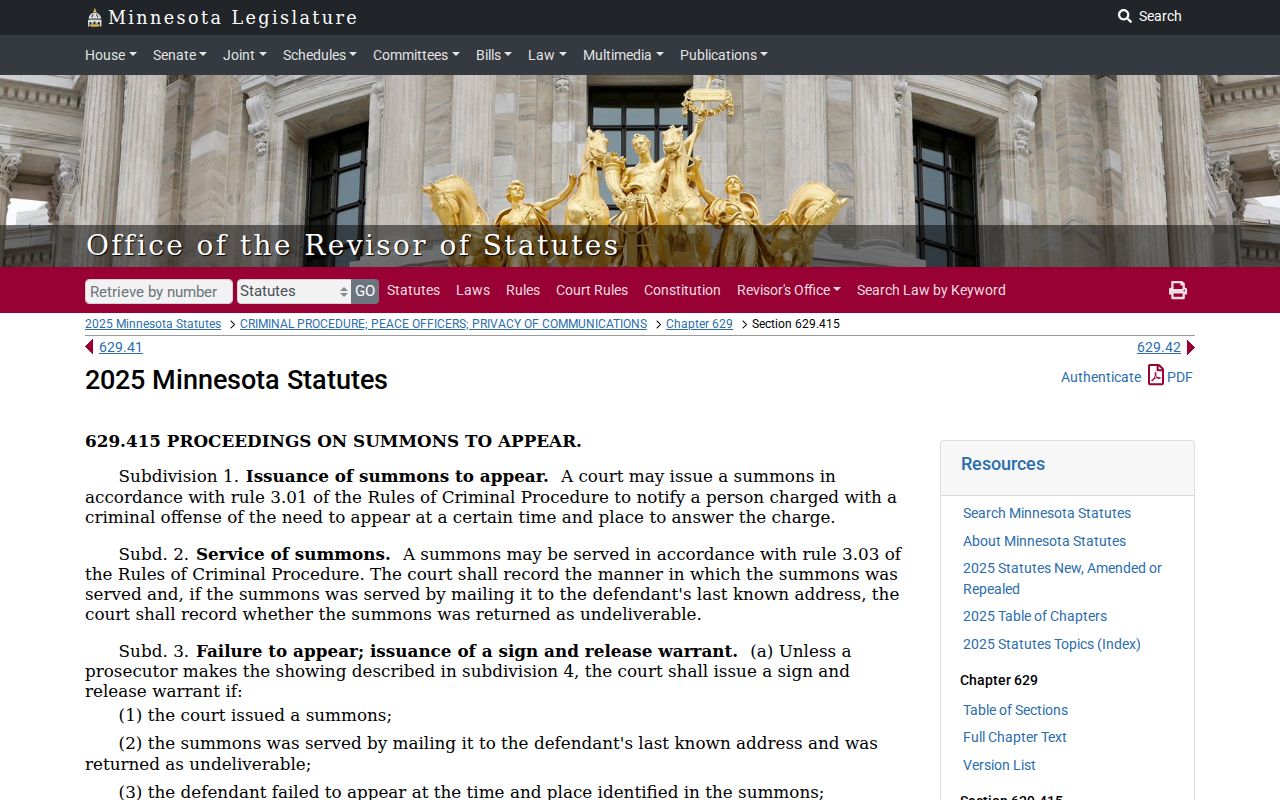
That statute is why a bench warrant label alone cannot tell a Wabasha County reader whether arrest is authorized.
Bench Warrants and Arrest Warrants Compared
Both papers come from a judge. Both can put a person in custody. The table below shows how they differ where it counts, for someone reading a Wabasha County case record.
| Point | Bench Warrant | Arrest Warrant |
|---|---|---|
| What starts it | A missed date, a payment, or a broken condition | A complaint and a probable-cause finding |
| Typical trigger | Nonappearance in a case already open | A new charge filed with the court |
| Bail | Set by the judge on the case, if at all | Set in the warrant or at first appearance |
| Common fix | Recall, reset, payment, or a sign-and-release form | Surrender, bail, or a contested hearing |
Reading a Bench Warrant in a Case Record
The register of actions is the part of a Minnesota case file that logs what happened and when. A warrant shows up as a dated entry. So do the events around it: the missed hearing, the filing, any bond activity, a later recall. Bail history reads as posted, forfeited, or discharged. The amount usually sits in the related bond document. Read the whole sequence and you can answer the question that matters most. Is the warrant still open? A single line out of context can mislead, which is why the surrounding entries matter in any Wabasha County warrant check.
Resolving a Wabasha County Bench Warrant
Fixing a Wabasha County bench warrant means working with the issuing court, and the sequence of steps matters.
- Confirm the warrant with the Sheriff at (651) 565-3361 and identify the court file that holds it.
- Search the file in Minnesota Court Records Online so you know the charge, the hearing, and any bail that was set.
- Talk to a licensed Minnesota attorney about a recall motion, a reset, or a surrender arranged in advance.
- Ask the court what payment, appearance, or motion applies, and get the answer in writing if you can.
- If bail applies, confirm the amount and the accepted payment with the jail before anyone travels.
Do Not Ignore It: A bench warrant does not expire because a year passes. It can surface at a traffic stop, a border crossing, or a license transaction, and the case stays open until a court closes it.
Appearing in Person Can Lead to Custody
Walking into a courthouse with an active warrant can end in arrest. Minnesota's own criminal FAQ gives that warning plainly. It is the best safety advice on the subject, and it also tells anyone unsure of their next move to get legal advice first. That does not mean staying away from the Wabasha County court forever. It means planning the approach. A lawyer can ask the court to recall the warrant before an appearance, or set up a surrender at a time and place the person controls. A phone call costs nothing and takes the surprise out of the visit. Read the state's guidance, published with the Minnesota criminal FAQs, before settling on a plan for an outstanding Wabasha County warrant.
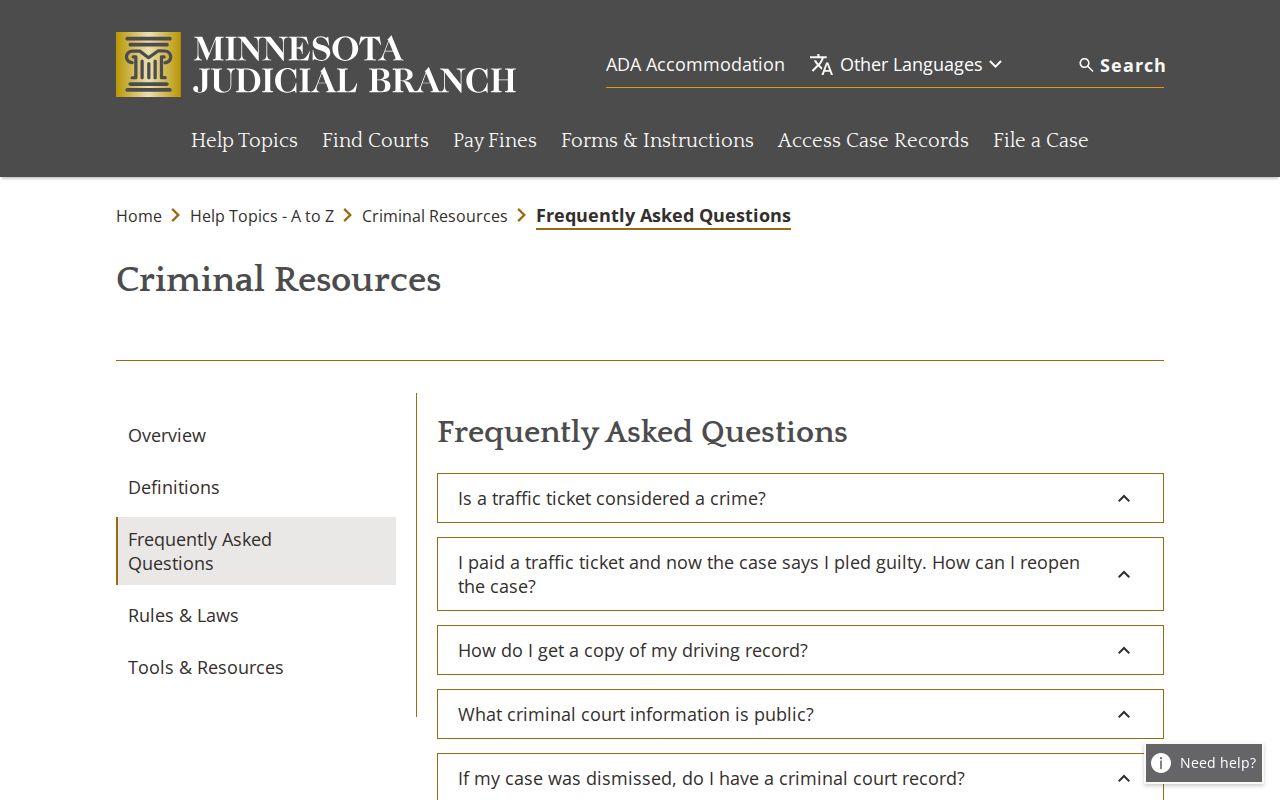
Reading that page before acting prevents the most common mistake in any Wabasha County warrant check.
What the Sign-and-Release Form Records
The official CRM1401 form is what carries a sign-and-release warrant through the system in Wabasha County. It records the county, the court file number, the offense, and the next hearing date and time. It also captures the person's name, date of birth, mailing address, phone, email, and interpreter needs, plus the defendant's signature. Law enforcement fills in its own share. That covers the agency, the officer's name and badge, and the contact date and time, and the form must be filed within two business days using the required code. When sign-and-release warrants exist in more than one county, one form is prepared for each county. There is no fee. And there is no public self-service channel for clearing a warrant through this form.
Finding the Court That Issued the Warrant
Nearly every bench warrant you will encounter in Wabasha County traces back to Wabasha County District Court. That one building handles more than people expect. Minnesota routes city tickets and ordinance citations through the district system too, so a traffic matter and a state charge can sit in the same file room. Warrants from elsewhere follow their own rules. A criminal bench warrant issued in another county belongs to that county, and a federal warrant stays inside the federal system. Sorting out where yours lives starts with the case number. If the number is hard to read, the court's own records staff can confirm it over the phone. Deputies who execute a warrant work under state law, and the authority for arrest and execution is set out in Minn. Stat. §629.30, which spells out those powers.
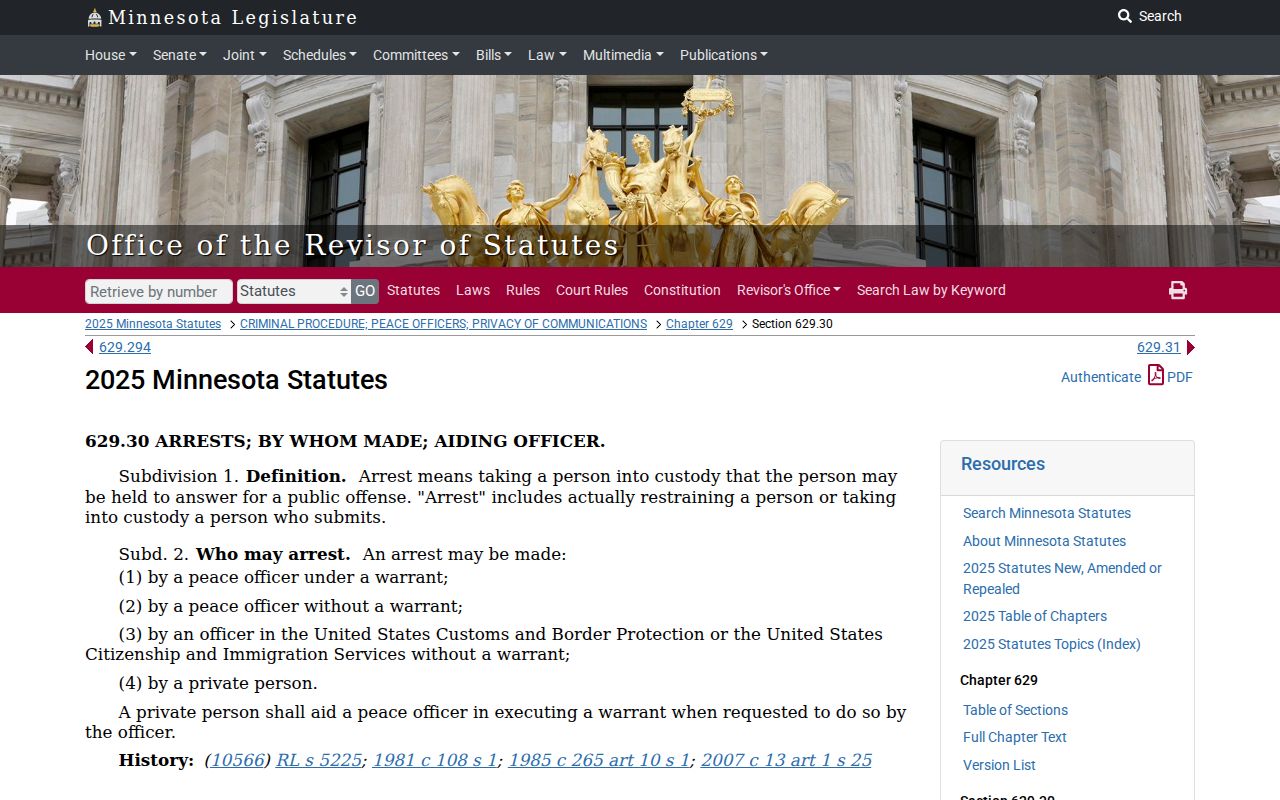
That statute is the authority Wabasha County deputies act under. It is why one call to the Sheriff settles a warrant status faster than any web page.
The Daily Court Calendar Is Not Complete
Wabasha County District Court posts its calendar at 7 a.m. each business day and refreshes it hourly, yet the printed version at the courthouse remains the most current one. Even so, the calendar has limits. The court itself warns that confidential matters and anything not remotely accessible are left off. So a case missing from the list is not a cancelled case. A hearing that drops from view can still sit on the record. Anyone checking whether a bench warrant was resolved should trust the case events and a call to court administration, not the calendar alone.